Review part geometry, tolerances, wall thickness, draft angles and machining requirements before production.
Compare extrusion, die casting, forging, fabrication, CNC machining and finishing to choose the right manufacturing route.
Optimize material use, part structure, tooling strategy and secondary operations to reduce manufacturing cost.
Support prototypes, trial samples, hardware insertion, sub-assembly and production-ready integration.
Engineering examples showing measurable manufacturing improvements
Customer needed a complex battery housing with tight sealing requirements and high volume production. Original design had excessive wall thickness and unnecessary machining features.
Recommended A380 die casting with post-CNC machining. DFM optimization reduced wall thickness variations, eliminated 3 secondary operations, and consolidated 2 parts into 1.
High-strength bracket for aircraft interior with strict weight and fatigue requirements. Customer originally specified CNC from billet, which was costly and wasteful.
7075-T6 forging with CNC machining. Heat treatment optimization achieved required mechanical properties with 15% weight reduction. Forging eliminated 60% of machining time.
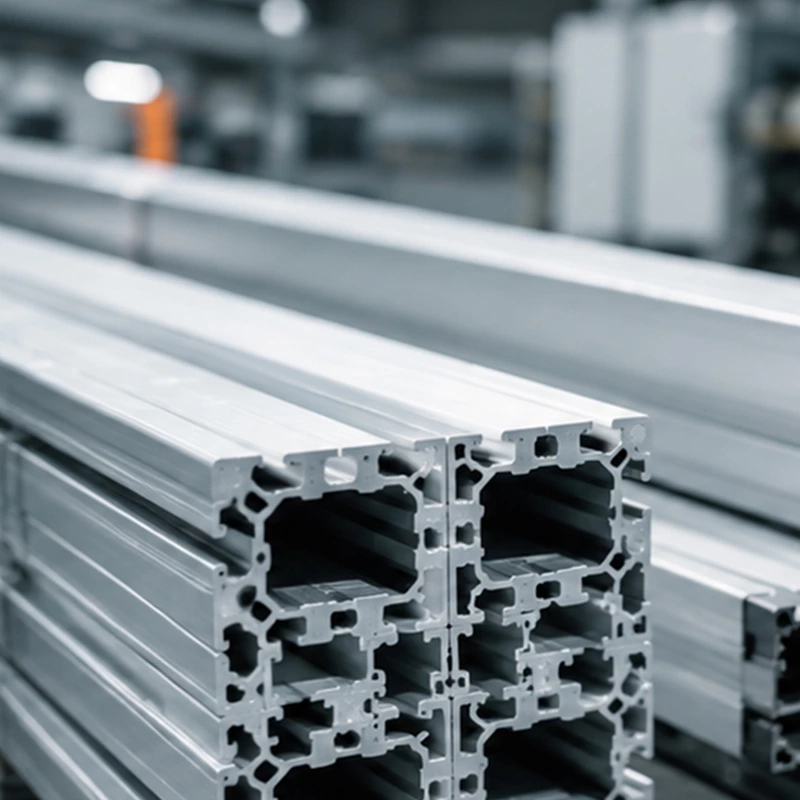
Custom heat sink profile for industrial power electronics with complex fin geometry and tight thermal performance targets.
6063 aluminum extrusion with custom die. Fin geometry optimized for thermal performance using CFD simulation input. Clear anodized for corrosion protection.
A structured engineering workflow from drawing review and DFM feedback to prototyping, production and delivery.
Upload CAD files, 2D drawings or project requirements. Include material, quantity, tolerance, surface finish and application details when available.
Our engineers review part geometry, wall thickness, tolerances, machining features, tooling needs, and manufacturing risks within 24–48 hours.
We compare suitable manufacturing routes such as extrusion, die casting, forging, fabrication, CNC machining and finishing to improve cost, lead time and production feasibility.
Prototype parts, trial samples or first articles can be produced to verify fit, function, tolerance, surface finish and assembly before moving into production.
Explore how our engineering team supports DFM review, process selection, cost optimization, prototyping and assembly for custom aluminum projects.
Applications
End-to-end aluminum engineering support engineered for quality, speed, and long-term partnership.
We review part geometry, tolerances, wall thickness, machining features, tooling risks, and assembly requirements before production.
We compare extrusion, die casting, forging, fabrication, CNC machining, and surface finishing to recommend a practical manufacturing route.
We support prototypes, trial samples, fit checks, hardware insertion, sub-assembly, and production-ready integration.
FAQ
After receiving your drawings or CAD files, our engineers review part geometry, tolerances, wall thickness, material, tooling needs, machining features and potential manufacturing risks. For complete project information, DFM feedback is usually provided within 24–48 hours.
Yes. DFM review is included as part of our quotation process. For projects that require extensive redesign, reverse engineering or full product development, we can discuss a separate engineering support scope.
Yes. We compare aluminum extrusion, die casting, forging, fabrication, CNC machining and surface finishing based on part geometry, material, tolerance, production volume, tooling cost and lead time. Our goal is to recommend the most practical manufacturing route for your project.
Yes. We can provide 2D production drawings and 3D models for tooling, sampling, and production reference within the agreed project scope.
We support PEM hardware insertion, riveting, fastener installation, sub-assembly, component integration, fit checks and export packaging for custom aluminum parts and assemblies.
Typical prototype lead time depends on part complexity, material and process. CNC-machined prototypes usually take 5–10 days, soft-tool or rapid-tooling samples usually take 10–15 days, and 3D printed form-check samples can be completed in 3–5 days.
Upload your drawings or describe your requirements. Our engineers will respond within 24 hours with an engineering review and initial feedback.
We use cookies to collect information about how you use this site. We use this information to make the website work as well as possible and improve our services.more details